


Basic Science

Our basic science kidney research is concentrated at labs at the UW South Lake Union campus.

South Lake Union
This is unpublished

Laboratory Research

Divisional faculty continue to advance the understanding of the pathophysiology of kidney diseases with laboratory-based research that is broadly based on studying the role of podocytes in glomerular disease and aging in the kidney (Shankland Lab) and using tissue organoids (Freedman Lab). 

Beno Freedman, PhD
Beno Freedman, PhD
Stuart Shankland, MD
Stuart Shankland, MD, MBA

Drs. Shankland and Freedman are part of the NIH-funded (Re) Building the Kidney consortium to leverage tissue regeneration as a treatment for kidney diseases. Organoids are an innovative approach to understanding disease pathophysiology, and the current focus at UW is to advance the understanding of polycystic kidney disease and cystinosis, among others. 

Freedman Lab

The Freedman Lab

The Freedman Lab seeks to understand how microscopic events produce macroscopic organs and disease. Our model is the kidney, a beautiful, complex, and vital organ. We use human iPS cell-derived organoidsCRISPR gene editing, and high-throughput screening to guide the development of 21st-century therapies.

Current research areas include polycystic kidney disease, cilia, glomerular disease, COVID-19, diabetic kidney disease, nephropathic cystinosis, and kidney regeneration.

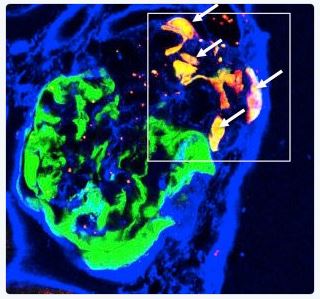
Shankland Lab Image

The Shankland Lab

The Shankland Lab is dedicated to investigating glomerular disease at the bedside in order to ultimately benefit patients. In particular, we study kidney regeneration, responses to kidney injury in disease, how potential therapies might impact outcomes at a molecular level, and how aging impacts kidney biology.