






UW's First Altruistic Kidney Donor
An Idea Changed Everything
Have you ever had an idea lodge itself in your mind—one so persistent and powerful that it alters the course of your life? An idea so bold it refuses to let go, compelling you to see it through?
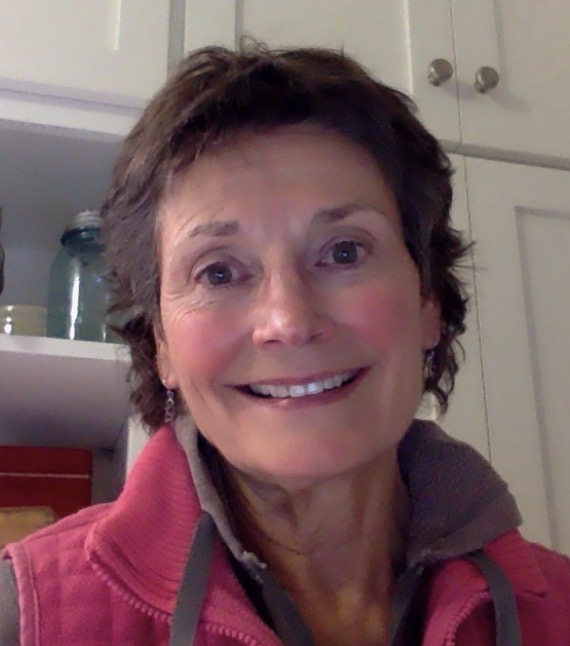
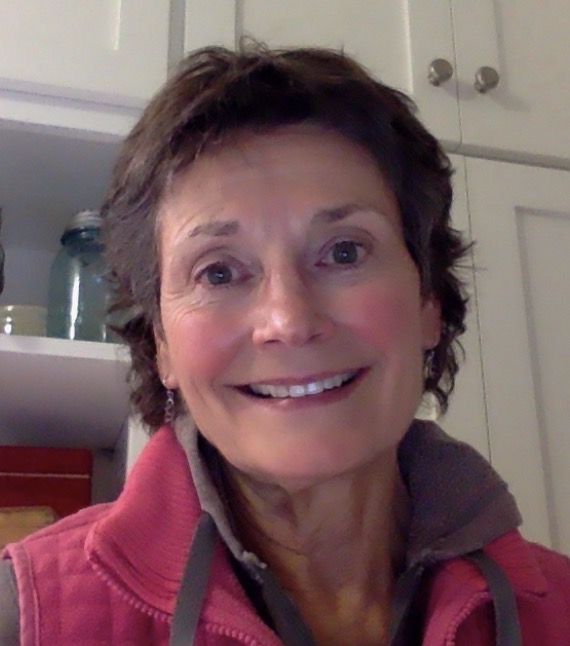
Twenty-four years ago, that's what happened to Linda Herbert, a registered nurse in Walla Walla, WA. During an ordinary workday at the hospital where she worked, an unexpected idea arrived—and it changed everything. She didn’t know it then, but that single idea would alter her life.
A typical workday in the ICU
Linda was working in the ICU on a busy workday like any other when a woman was admitted to the unit. The woman had developed pulmonary edema while being worked up for a kidney transplant. The woman’s adult sons visited their mother, and Linda had the opportunity to meet them both. She immediately saw the difference between the two men. One son was healthy and full of vigor and strength. He was hoping to donate one of his kidneys to his mother. The other son had a sallow, strained look of chronic illness. Linda recalls that looking at the sons was like night and day. The physical contrast between them was heart-wrenching. She learned that the elder son suffered from polycystic kidney disease, just like his mother. Undoubtedly, his kidney disease had pervaded his life. His illness diminished his ability to enjoy being a father and husband, as well as to pursue a career, hobbies, and recreation. She was struck by the obvious difference between health and illness that stood before her.
In that moment, Linda had an urgent thought: “I could give him one of my kidneys!”
The idea persisted in her mind. Linda shared the thought privately with the ICU doctor. They discussed it and weighed the impact of such an audacious act. As a first step, they had to find out if Linda had the same blood type as the sick man to determine if kidney donation was a possibility. Sadly, they were not a match. Rather than say, “Oh well,” and forget the whole thing, the thought had taken hold of her. She wondered, "Since I was ready to do this for someone I barely knew, why couldn't I donate a kidney to someone I didn't know at all?" The seed of a plan grew in her. After great introspection, Linda decided there was nothing she wanted more than to be an anonymous kidney donor and give the gift of health to whomever she was a match with. Even though she couldn’t help the sickly man she had met at the hospital, she could certainly help someone else. What a tremendous gift it would be to share the vitality that she had taken for granted with someone who had lived with the disability of ESRD. That was the beginning of her journey. She had no way of knowing that her decision would affect her in unimaginably positive ways.
Will they accept my donation?
Linda’s next step was to write a letter to the Transplant Selection Committee at UW Medicine in Seattle, requesting that they accept her as an anonymous, non-directed kidney donor. She explained her reasoning for the decision and that she was resolute in making such a life-changing choice. The committee responded after a short time, saying that she could proceed with the medical and psychological evaluations required for organ donors. Later, in the fall of 2001, Linda was matched with an anonymous patient. She prepared herself and traveled to Seattle for the transplant surgery to donate one of her kidneys. Linda was the very first altruistic living kidney donor at UW Medicine!
The nursing staff most likely assumed that Linda had stepped forward to donate her kidney for a friend or relative, and were not aware that she wanted to remain anonymous or know anything about the person receiving her kidney. However, during a blood draw before the surgery, a nurse inadvertently mentioned that the kidney recipient was a woman named Francis in her 50s. Linda was initially disappointed that she learned this information. Eventually, she realized that personalizing the recipient actually made her feel good.
Surgery and recovery
Once the surgeries were complete and successful, Linda began her road to recovery. Despite the warnings about possible medical issues and concerns, and the typical post-op discomfort and stresses, Linda knew in her heart that she had done the right thing. She knew she had set her path the moment she chose to be an organ donor. No obstacle or moment of doubt had caused her to abandon the idea of donating. “When you donate a kidney, you’ve just got to let go,” Linda said.
She returned to Walla Walla and took time off work to recover. Initially, even though Linda knew the recipient's name and it felt right to know it, she still felt reluctant to learn anything more about the woman who had received her kidney. It seemed too overwhelming. As time passed, however, she became more comfortable with the thought of learning about Francis.
No longer wanting anonymity
Linda wrote a letter to the transplant coordinator and social worker saying,
“It has surprised me how much my feelings have changed. Right until the actual process of donation began, I thought I had myself all figured out. There was no doubt that I wanted this to be strictly anonymous in all ways. But when I learned Francis’ name and tidbits about her, I discovered she was a lovely woman with three daughters. Each piece of information about her was music to my ears. Now that I have given my kidney to Francis, it's a whole different ballgame. It's our kidney. We are joined now by the fact that I have shared my health with her. I very much want to know Francis' progress from here on out. I want to know more about the person that she is, and more about her family.”
Linda learned that one of Francis’ daughters, who was not a compatible donor for her mother, chose instead to donate a kidney to Francis’ dialysis partner—the patient in the next chair at the treatment center. It was a development that brought the story of generosity surrounding Francis full circle and made Linda very happy.
The donor and recipient connection
Linda began receiving letters from Francis’s family. She has kept every single card and letter. One card read, “Thank you for giving us our grandma.” Linda and Francis continued corresponding via mail for months, and after about a year Linda finally met Francis, her husband Felix, and their family. They planned for Linda to travel to Moses Lake to meet them at their home. Francis, Felix, their three daughters, grandkids and great-grandkids were all there. “It was exciting to see what a tremendous person Francis was, and that Felix was, and the love, which I already knew from the cards and letters I had received.”
Francis was a compact Latina woman who grew up in Texas. She met her husband, Felix, when she was attending nursing school and he was a lab tech. “He was the most lovely, lovely man,” Linda recalls. “Felix was the one who communicated with me every year at Christmas. He was the one who would keep me up to speed. But I got letters from Francis, too, and she'd always say, ‘Our kidney is doing well!’”
When Linda reflects on how the act of donating changed her, she says, “I can't say enough about making a decision that puts the other person's health before yours. You weigh the risks and the benefits, and the benefits are tremendous. What I got to do for that woman so that she could play with her grandkids! I had the opportunity, and I seized it. Do I have regrets? No, I would do it again.”
Sharing and encouraging others
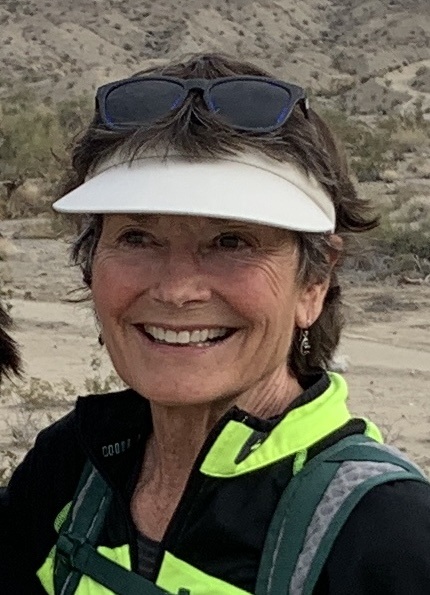
These days, Linda shares her story of kidney donation with an open heart—not to boast, but in the hopes that others might feel inspired to consider giving. She speaks about how the experience humbled her, how it filled her with profound gratitude for her own health, and how offering her healthy kidney to someone in need became a gift that changed two lives at once. For Linda, the act of giving didn’t just save another person’s life—it expanded her own. She was able to meet Francis’s amazing family and see the love among them. Francis could live her life more fully and be more active with her kids and grandkids because of the gift of the kidney.
Being an example to others can be a little like sprinkling magic pixie dust—you never know where it will land or what it might inspire. Linda recalls that a friend she worked with at the hospital donated a kidney to her sister-in-law after learning that Linda had donated and was doing so well. It was part of her decision process: “Linda Herbert did it and she’s fine. Why shouldn't I?” When an idea takes root in you and the joy it brings spreads outward, inspiring someone else to act, that is its own kind of magic.
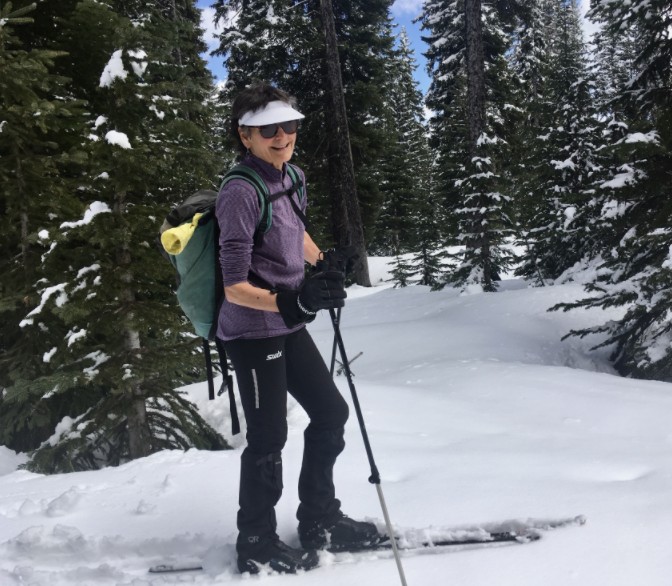
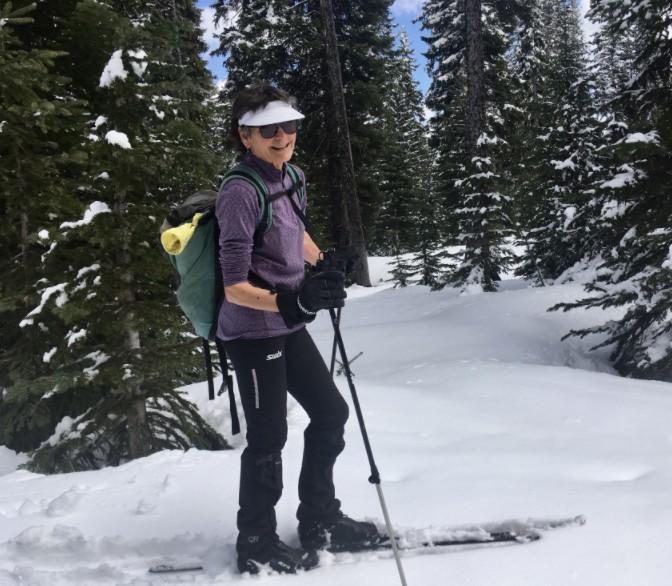
When Linda had healed from the surgery, she returned to her physical activities of running marathons and skiing. She watches her sodium and lives a very healthy lifestyle. The local kidney doctor in Walla Walla told her, “When you're out 10 years (past organ donation), that is free sailing.” For Linda, it has been 24 years and counting!
Linda recently spoke at a living donor event at Whitman College about her experience. She is more comfortable talking publicly about it than she used to be. She says that if there is somebody on the fence about donating, she would be happy to talk to them.
“Too few people are willing to do this. It is time for me to step up and speak about how it has changed me for the better.”
Story by Krista Forsyth Fisher - UW Division of Nephrology